Airport News

Seoul Incheon (ICN) September 2025 Flight Statistics Report (Flight Volume, On-Time Performance, Cancellations)
Flight Volume and Growth TrendsSeptember 2025 saw stable throughput at Seoul Incheon (ICN) on the departures side, with total scheduled flights of 14,918, a year‑on‑year change of -2.38%. While the headline decline is modest, the scale still reflects ICN’s role as Northeast Asia’s long‑haul and transfer hub in September 2025, supported by resilient regional demand. The month’s performance was shaped by shoulder‑season dynamics after the summer rush, with leisure demand easing but corporate traffic gradually returning. For airlines operating out of Seoul Incheon (ICN), the slight softening versus September 2024 aligns with capacity normalization on a number of trunk routes, and selective upgauging that prioritizes load factors over frequency. Structurally, ICN continues to benefit from a well‑balanced mix of full‑service and low‑cost carriers, helping distribute flows across peak and off‑peak banks. Looking ahead to Q4, airlines at Seoul Incheon (ICN) are likely to preserve schedule discipline, using tactical adjustments around Golden Week spillover and early holiday bookings. Against this backdrop, the September 2025 baseline of 14,918 departures provides a solid platform for incremental growth once winter schedules kick in, particularly on transpacific and Southeast Asia corridors where demand indicators remain favorable.On-Time Performance AnalysisPunctuality at Seoul Incheon (ICN) improved noticeably in September 2025. The departures on‑time performance reached 55.77%, widening by +7.49 percentage points versus the same month last year. This gain suggests more effective departure metering and ground‑handling coordination across main terminals, supported by better aircraft‑turnaround planning. Even so, mid‑day congestion and weather variability still produced pockets of delay, particularly around banked waves for long‑haul services. Relative to regional peers, ICN’s September 2025 outcome places it in the mid‑pack, with scope to consolidate the improvement through targeted slot smoothing and continued collaboration with air traffic control. From a passenger perspective, the step‑up to 55.77% means a meaningfully higher probability of on‑schedule departures compared with September 2024. For operators, the additional buffer implied by the +7.49 percentage points gain can translate into fewer downstream knock‑ons to rotations, higher aircraft utilization, and improved crew‑duty predictability heading into the busier late‑year period.Cancellations and Operational StabilityCancellations at Seoul Incheon (ICN) were comparatively elevated in September 2025. Total departure cancellations reached 661, representing a year‑on‑year shift of +91.59%. The increase reflects a combination of tactical schedule trims and isolated operational disruptions clustered on a handful of weather‑affected days. While the headline cancellation ratio remains within a manageable range for a major hub, the uptick underscores the need to maintain standby capacity and flexible reaccommodation options. For passengers, more robust rebooking pathways and transparent disruption communications remain essential. Airlines based at Seoul Incheon (ICN) appear to be prioritizing reliability by consolidating lower‑yield frequencies rather than risking rolling delays; however, continuing to refine maintenance planning and crew pairings should help reduce non‑weather‑related cancellations. With the underlying on‑time improvement to 55.77%, the expectation is that cancellations can normalize provided exogenous factors do not recur in clusters.Overall Assessment and OutlookTaken together, September 2025 metrics at Seoul Incheon (ICN) show a mixed but improving operational picture. Departures totaled 14,918 with a year‑on‑year change of -2.38%; on‑time performance strengthened to 55.77% with a gain of +7.49 percentage points; cancellations were 661 (YoY +91.59%). The data imply capacity discipline alongside tangible punctuality progress. For the remainder of 2025, the priority should be to lock in these punctuality gains while carefully rebuilding frequencies on corridors demonstrating sustained demand. Investments that further digitize ramp operations and enhance turnaround predictability would support resilience during winter peaks. Provided macro demand holds, Seoul Incheon (ICN) is well‑positioned to deliver steadier operational outcomes through Q4.Travel Recommendations and Passenger TipsTravelers using Seoul Incheon (ICN) in September 2025 and the coming months should plan proactively. Allow additional buffer during banked waves and consider earlier departures to improve the odds of benefiting from the improved 55.77%. When disruptions occur, monitor airline apps and airport displays, and secure reaccommodation promptly; same‑day alternatives can be constrained when cancellations reach levels like 661. Build slack into connections—90–120 minutes for regional‑to‑long‑haul links is prudent—and confirm visa/transit rules in advance. For real‑time updates on gates, delays, and baggage, use the NextFly App, which aggregates alerts across carriers and helps optimize time in terminal. Finally, pre‑select seats and tag bags early to streamline boarding, and consider off‑peak check‑in windows to avoid queues during weekend peaks.
2025/10/11 08:43
London Heathrow (LHR) September 2025 Flight Statistics Report (Flight Volume, On-Time Performance, Cancellations)
Flight Volume and Growth TrendsIn September 2025, London Heathrow (LHR) handled a total of 20,204 departing flights, representing a year-over-year change of +0.99%. This modest expansion suggests demand at Europe’s busiest hub remained resilient as late-summer leisure tapered into early corporate travel. The month’s pattern typically blends residual holiday peaks with a ramp in business itineraries, and seat deployment decisions appear calibrated rather than expansive. Relative to peer hubs, Heathrow’s incremental rise is consistent with carriers optimizing widebody utilization and selectively restoring frequencies on transatlantic and short-haul European routes. Capacity stewardship likely prioritized load factor and yield quality over raw volume growth, which helps explain the measured pace. Compared with September 2024, the airport’s traffic mix shows a stable backbone of core markets, with selective recovery where slot discipline and aircraft availability allow. Overall, the 20,204 figure underscores a steady platform heading into the shoulder season, with airlines balancing network breadth and profitability while monitoring cost pressures and macro signals.On-Time Performance AnalysisHeathrow recorded an on-time performance of 47.14% in September 2025, a year-over-year change of +8.58 percentage points compared with September 2024. While still below the levels typically associated with unconstrained operations at large hubs, the improvement indicates more efficient flow management during peak waves and better alignment between schedules and available resources. Weather variability, airspace complexity over Southern England, and dense ground movements remain structural headwinds, but tactical adjustments—such as refined departure sequencing and more disciplined block times—appear to be yielding results. For travelers, a 47.14% on-time performance underscores the value of robust connection buffers at LHR, especially during morning and evening banks. For airlines, the uptick in punctuality reduces knock-on delays across networks and can improve aircraft and crew utilization. Continued focus on stand allocation, turn-time adherence, and coordinated slot usage will be critical to sustain and build upon the +8.58 percentage points gain as autumn schedules intensify.Cancellations and Operational StabilityIn September 2025, Heathrow reported 285 cancellations, reflecting a year-over-year change of -48.28%. This sharp reduction points to improved schedule integrity and fewer day-of-operations disruptions. While isolated weather systems and occasional staffing or technical issues persisted, mitigation steps—ranging from proactive aircraft swaps to flexible crew rostering—helped contain ripple effects. The 285 figure also suggests more realistic scheduling and prudent contingency planning, reducing the need to trim rotations when conditions tighten. For passengers, fewer cancellations translate into more predictable journeys and lower rebooking pressure on peak-day departures. For operators, a -48.28% change materially lowers irregular-operations costs and protects revenue on full flights. Looking ahead, maintaining this stability will depend on continued collaboration between air traffic service providers, ground handlers, and carriers, particularly as winter weather patterns emerge and maintenance cycles intersect with holiday-period demand.Overall Assessment and OutlookCombining the month’s core metrics—departures at 20,204, on-time performance at 47.14% (a +8.58 percentage points improvement), and cancellations at 285 (a -48.28% change)—Heathrow’s September 2025 operational picture is one of controlled growth and strengthening reliability from a low punctuality baseline. The volume trend indicates stable demand with disciplined capacity, while punctuality gains and fewer cancellations point to better operational choreography. Over the next 4–8 weeks, seasonal cooling and thinner thunderstorm activity may support further small improvements in schedule adherence, though early fog events and airspace constraints can still inject variability. Airlines are likely to maintain measured capacity plans into October and November, prioritizing fleet utilization and connectivity over aggressive expansion. Overall, the airport enters the shoulder season on firmer footing, with risks balanced by process improvements that have already delivered a tangible +8.58 percentage points step-up in on-time performance.Travel Recommendations and Passenger TipsFor September’s conditions at London Heathrow (LHR), travelers should plan itineraries that accommodate the airport’s improving yet limited punctuality. When possible, select earlier departures to buffer against stacking delays in later waves, and allow ample connection time, particularly if your itinerary crosses terminals. With departures totaling 20,204 and on-time performance at 47.14%, prudent scheduling remains essential even as cancellations have fallen to 285. Arrive at the airport well ahead of peak banks, monitor gate changes, and consider fast-track security where available. For real-time flight status, terminal maps, and historical delay patterns, use the NextFly App to track your journey and adjust plans proactively. If weather disruptions are forecast, rebook onto flights with resilient turnaround histories or longer ground times. These steps align with Heathrow’s current trend of gradual reliability gains and will help convert operational improvements into a smoother door-to-door experience.
2025/10/11 07:10
Luis Muñoz Marín International Airport (SJU) August 2025 Operational Report
2025/09/22 09:55
Kraków John Paul II International Airport (KRK) August 2025 Operational Report
2025/09/22 09:55
Nanning Wuxu International Airport (NNG)
2025/09/22 09:55
Marseille Provence Airport (MRS) August 2025 Operational Report
2025/09/22 09:55
José María Córdova International Airport (MDE) August 2025 Operational Report
2025/09/22 09:55
Perth Airport (PER) August 2025 Operational Report
2025/09/22 09:55
Vnukovo International Airport (VKO) August 2025 Operational Report
2025/09/22 09:55
Louis Armstrong New Orleans International Airport (MSY) August 2025 Operational Report
2025/09/22 09:55
Airline Insights
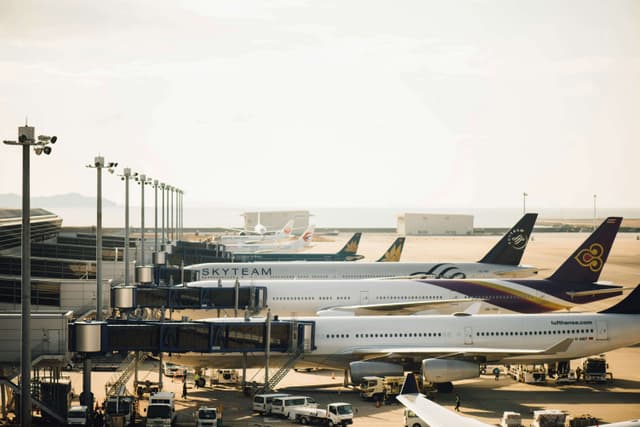
Hong Kong Airlines (HX) August 2025 Operational Report
Flight Activity Overview Total arriving flights: 2,668Year-over-year change: +6.46% Hong Kong Airlines handled 2,668 arriving flights in August 2025, with demand lifted by summer travel and steady cross‑border traffic through Hong Kong. Year-over-year growth reflects firm capacity deployment on short‑haul routes to Mainland China, Japan, and Southeast Asia, together with improved aircraft utilization. Competition at regional hubs remained active, yet the carrier focused on frequencies at peak times to protect connectivity and defend market share. On-Time Performance and Cancellations On-time arrival rate: 85.49%Change in on-time rate: +11.39 percentage pointsCancelled flights: 417Year-over-year change (cancellations): +41.36% The on-time performance at Hong Kong Airlines reached 85.49%, a substantial improvement of +11.39 percentage points. Weather in the Pearl River Delta and air traffic flow restrictions still produced pockets of delay, but stronger gate turnarounds and closer crew planning helped stabilize the schedule. The increase in cancellations to {cancel_str} year over year reflects localized disruptions; the carrier responded by pre‑positioning spare aircraft and expanding cross‑qualification to improve recovery speed. Key Hubs Hong Kong International Airport serves as the core hub, enabling dense connectivity to the Greater Bay Area and short‑haul gateways in Northeast and Southeast Asia. The carrier emphasized trunk routes to Tier‑1 Mainland cities while nurturing leisure demand to Japan and Thailand. A wave‑bank structure around morning and late‑evening peaks concentrates inbound‑outbound connections and supports reliable minimum connecting times. Outlook For travelers, Hong Kong Airlines offers dependable connectivity across the region; August results suggest punctuality can remain strong into autumn while recovery plans mitigate disruptions. Customers connecting via Hong Kong should allow sensible buffers during typhoon season, but can expect clear information and proactive reaccommodation when needed. Looking ahead, the airline plans to refine peak‑period resources, expand self‑service channels, and adjust schedules as new demand patterns emerge.
2025/09/19 02:09
Uzbekistan Airways (HY) August 2025 Operational Report
Flight Activity Overview Total arriving flights: 3,121 Year-over-year change: +0.42% Uzbekistan Airways handled a steady 3,121 arriving flights in August, a marginal +0.42% year‑over‑year increase. Demand on Central Asian trunk routes and summer leisure flows remained resilient, while schedule density on select European and Middle Eastern city pairs was kept conservative to protect reliability. The balanced growth suggests the carrier prioritized stable connections over rapid expansion as peak‑season travel tapered across the region. On-Time Performance and Cancellations On-time arrival rate: 90.74% Change in on-time rate: -4.88 percentage points Cancelled flights: 9 Year-over-year change (cancellations): -55.00% Punctuality registered 90.74%, with a change of -4.88 percentage points versus last year. Heat‑related weather, regional air traffic control spacing, and busy evening arrival banks at Tashkent placed pressure on turn‑times. In response, the airline concentrated maintenance windows earlier in the day, staged spare crews, and tightened gate‑in processes at key stations to limit follow‑on delays while keeping cancellations low at just {cancels_str}. Key Hubs Tashkent International Airport serves as the central hub, anchoring connections between domestic cities and long‑haul partners in Europe, the Middle East, and East Asia. Samarkand operates as a seasonal and tourism‑oriented focus city, supporting heritage travel and regional links. Wave‑bank scheduling at TAS concentrates arrivals before mid‑day and late evening departures, improving connection windows for flows to Istanbul, Dubai, Delhi, and Seoul. Outlook For travelers, Uzbekistan Airways currently offers reliable completion with very few cancellations and solid day‑of‑travel information. Expect punctuality to stabilize around current levels as summer congestion eases and ground processes refine, with targeted customer upgrades such as clearer rebooking options during weather events. Network plans emphasize measured capacity into high‑demand corridors and additional seasonal frequencies, aiming to keep connection times competitive through the autumn holiday period.
2025/09/19 02:09
Fuji Dream Airlines (JH) August 2025 Operational Report
2025/09/19 02:09
Air Serbia (JU) August 2025 Operational Report
2025/09/19 02:09
STARLUX Airlines (JX) August 2025 Operational Report
2025/09/19 02:09
SCAT Airlines (DV) August 2025 Operational Report
2025/09/18 08:55
BA Cityflyer (CJ) August 2025 Operational Report
2025/09/18 08:55
CommuteAir (C5) August 2025 Operational Report
2025/09/18 08:55
Thomson Airways (BY) August 2025 Operational Report
2025/09/18 08:55
US-Bangla Airlines (BS) August 2025 Operational Report
2025/09/18 08:55